Search This Blog

Friday, 20 May 2016

Kristen Lamb on being a professional writer


The Hard Truth About Being a Professional Writer


Screen Shot 2016-05-18 at 9.06.09 AM

I happened to see this meme (above) on Facebook and I lost it laughing. This is such a great metaphor for what it is like to be a writer. In the beginning I was a rose, then I learned to become the dandelion. The dandelion might not be as pretty, but it is prolific and it is a survivor.

When I decided years ago to leave sales and become a writer, I had a far more glamorous idea of what it was like to be a professional writer (pieced together from movies). Additionally, it didn't help that my first "novel" was so much fun to write.

Of course it was fun! I didn't have to be constrained by these pesky things called "rules" and "craft." I was like some kid banging away on a piano believing I was, in fact, making music.

Yet, when I joined a writing group and quickly learned how little I knew, there was this interesting change in my energy and how I approached writing.

Because now I had to think of things like "genre constraints", "plot points", "pinch points", "pacing", "scene and sequel" I found that all the fun rushed out of the process with the violent force of a depressurized jet liner. I started getting stuck. Then I'd flit from new idea to new idea trying to recapture the magic I'd once had.

Like all newbies I too started wanting to know how the pros found "inspiration" because the only thing I felt inspired to do was drink heavily and complain.

Thus, today we are going to talk about what it is really like to do this job.

When we are new, there are elements we believe we MUST have to be successful, when in truth? They are great, but seriously overrated.

Well, at least for the dandelion ;) ...

Inspiration is Overrated


Seriously. I do believe inspiration is there and it is a necessary and vital ingredient of what we do, but it's like trying to bottle a rainbow. We enjoy it when it appears then move on when it's gone.

When I was new, I had to feel in the "mood" to write and if anything interrupted that mood? I withered.

I was like the rose in the image, needing the perfect Ph to bloom. When I got good, though was when I became the dandelion. Any crack I could work in? I did.

CONCRETE! WHOO! HOO!

Talent is Overrated


I have met countless writers far more talented than I am. Problem was, they never sat down and got their a$$es to work. Talent is useless unless it is employed. We still have to do the work. And, the more we write, the more "talented" we become.

I know what it is like to sit in a critique group and hear another (more talented) writer read…then to feel discouraged. But, what I found happened more times than not was that super talented writer rarely finished. So me getting discouraged was just a waste of writing time.

Bees (readers) visit a lot more dandelions than they do rose bushes with no blooms ;) .

Feelings are Overrated


Feelings lie. They are fickle and fleeting and secretly jealous when you pay attention to other things (like doing the work). One of the reasons I love writers (especially new writers) having a blog is it trains in discipline. Writing is a seriously tough job, especially in the beginning.

There is no evil boss who will write me up and fire me if I don't get in my word count.

I have to be self-motivated.

Blogging trains in the discipline of a journalist. Journalists can't wait to feel inspired to write about that five-alarm fire. They don't have the luxury of reworking and reworking a piece because it isn't worthy of a Pulitzer. Journalists have a finite amount of time to get the work done…then they SHIP.

Perfection is Overrated


One thing that will kill "inspiration" is to try to make the writing perfect. When we stop and fuss and futz with every sentence, we stall out. We leave a space for self-doubt, negativity and depression to creep in. Here's the deal. No half-finished perfect book has ever become a NY Times best-seller, but a lot of crappy finished novels have.

Too may writers just are not giving permission to write that crappy first draft. Just write. Finish it. Then feel free to go back and refine. There is some really ugly hard work that is no fun that HAS to be done.

Screen Shot 2016-05-18 at 9.05.36 AM

Guess what? The more you write the better you get. The only way to become really good at writing novels….is to write novelS. As in plural. This is science so don't argue.

Seriously, would you trust a brain surgeon who'd only performed surgery once?

Think about it.

Pretty Prose is Overrated


One thing that stalls a lot of writers is they are too busy trying to craft every sentence to be so beautiful it makes angels weep. This is problematic for a number of reasons.

First, this verbal glitter often comes at the expense of a story. Pretty prose does not a novel make. I've gotten lots of submissions from writers who had glorious prose…but there was no hook. No story. Nothing to draw me in.

Fiction is about one thing and one thing only. PROBLEMS. No problem? No story. Now, if we do have a problem and also the ability to weave in glorious prose? Awesome. Just we have to make sure we are not trying to substitute fancy language for actual story.

The next reason pretty prose is overrated is that if we use too much, it can actually harm the story. It's jarring to the reader and adds nothing but confusion. Remember that this kind of prose is like super rich food. It's incredibly tasty but we have to limit it and balance it with other lighter pairings or it's too heavy (and makes the reader sick).

So what I hope you will take away from all of this is that writers write. Plain and simple. There are good days and bad days and days you will wake to the sound of your cat puking and the toilet overflows and the kid is sick, but it is still a job. It is a job that can be wonderful and rewarding and everything listed above---inspiration, talent, good feelings, perfection, pretty prose---are great when we can get them, but not necessary to bloom ;) .

What are your thoughts? Are you busy waiting for inspiration instead of writing? Do you find yourself procrastinating because you don't think your work is good enough? Do you suck at finishing? Are you giving your feelings too much of a vote? Or did you once struggle with all of this stuff and now you are a proud DANDEFREAKINGWEED of a writer?
Thanks to Kristen Lamb for this borrowed post. Go and check out her blog - it's the best for indie writers and covers all the nuts and bolts of writing.  https://warriorwriters.wordpress.com/join-the-love-revolution-mywana/
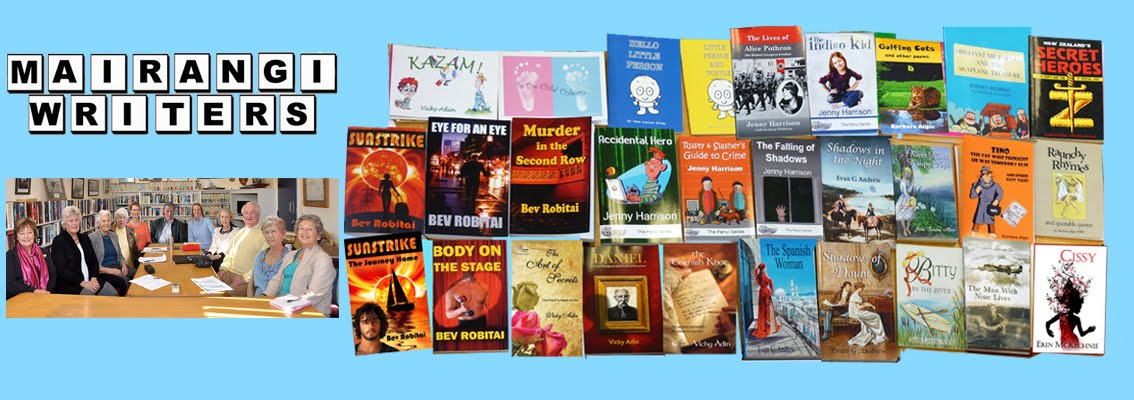
And the rest of our fabulous Mairangi Writers group, do check the blog roster and see when you're due to provide a post!

Friday, 13 May 2016

Guest post - Alex Limberg on great endings.


In this highly practical guest post, copywriter Alex Limberg shows us seven ways to create great endings - with examples from famous authors who did just that.

The feeling your ending evokes will stay with the reader long after they have finished your story.
So you'd better make it an exciting, moving closure, and one to remember.
Your last words are the climax of your writing. And isn’t reading a great story with a weak closure - a dead end - like eating a steak without sauce? The centerpiece might still be great, but it’s a lot less satisfying.

Now
how
do you create that powerful ending to remember? Hasn’t it all been done before?
Yes and no.
True, certain types of ending come up time and again, but when you apply them to your own story, they become unique. And there is a reason
they have been used time and again – they carry a lot of impact.
So no need for you to reinvent the wheel.

We have brought together for you seven types of
closures
(archetypes, if you will) that work astonishingly well. Famous authors have used them, and we will show you their examples.
Apply these closures to your own stories and wow your readers!
Also, because I know it’s not easy to create intriguing endings, beginnings, or any other part of your story for that matter, you can download my free e-book about
“44 Key Questions” to test your story and make every part of it intriguing and awesome.
Try these seven closures on your stories and they will work wonders:
1. Get Them by Surprise
Surprise works every single time. That’s because us humans are curious creatures. You could uncover a surprising fact or give the action a surprising twist. Anyways, your readers will appreciate being astonished
. That’s what they are reading stories for, after all.
Your readers will have certain expectations. They depend on the genre, the protagonists, the language, and so on… Be aware of your readers’ expectations. Put yourself in their shoes. Then give them something they don’t
expect, but that still makes sense for your story.
Maybe the thief turns out to be the narrator’s own husband or even the narrator herself. Maybe the girl doesn’t pick between her two suitors, but instead marries their uncle. Or plumber.
Agatha Christie, the master of plausible surprise, shows us perfectly how it’s done in And Then There Were None. Ten visitors are trapped on a small island and murdered one by one. As nobody else is on the island, it’s clear one of them must be the murderer… but who?

One suspect after another is snuffed, until only one person is left alive. It’s now clear she must be the murderer, until… the highly unexpected closure reveals she is not.
The novel ranks amongst the bestselling books of all time.

2. Play Their Mood with an Elegiac Fade Out

Milan Kundera takes a very different approach when he wraps up his The Unbearable Lightness of Being:
"Up out of the lampshade, startled by the overhead light, flew a large nocturnal butterfly that began circling the room. The strains of the piano and violin rose up weakly from below."
Kundera’s classic novel fades into the distance like a piece of music. The ending doesn’t want to bring suspense, puzzle or get you to think. It’s all about mood. It’s a slow ending.

Try to make your reader really feel the power of the moment, be it terrified, happy, sad, or sentimental.

Think of little symbols, like the butterfly above; with Kundera, it might stand for lightness, repeating the theme in the novel’s title. You could zoom in on a tapping finger or a dew drop, or zoom out to show wooded hills or a rural mansion.

Landscapes and weather make very memorable finishing moments (“…and great shaggy flakes of snow began to fall”).

Leave the reader with a unique vibe, and she will appreciate it. Sometimes, it’s all your closure needs.

3. Throw Them a Punchline

With this one, you have to be careful. Do you know that situation when Uncle Albert at the holiday lunch table makes a big fuss about his upcoming joke, but the punchline is almost non-existent?

You don’t want to be like that. You could tell a joke or describe surprising action, but make it count.

Your punchline doesn’t have to be funny. It could be an action or a simple observation. In any case, it should connect to the stories topic, even if it’s just a symbolic hint. Otherwise it will be up in the air and look arbitrary.

George Orwell’s novel Animal Farm is one big parable on how totalitarian systems arise and thrive. It’s told in an animal world. Look at the clever, indirect and also depicting note Orwell ends on:
“The creatures outside looked from pig to man, and from man to pig, and from pig to man again; but already it was impossible to say which was which.”
4. Create Suspense by Leaving Open Questions

If you want to tickle your reader with suspense, cue an open ending: Ok, the Apaches are defeated, but will they be back again? The starship has escaped the pudding-like aliens, but will it ever make its way home to planet earth?

These kind of endings will keep your readers on their toes and make them long for more. But be aware that they can also be very unsatisfying. After all, your reader bought your book so he can hear from you what happened.

“Just imagine the rest yourself,” can be a little unsatisfactory. But if you have delivered a great deal of action beforehand and the question remains intriguingly vague, it might be worth it.

Let’s showcase another one of the most successful novels of all time, Margaret Mitchell’s Gone With The Wind. It ends with Scarlett O'Hara longing to be together with Rhett Butler again – but can she? Also pay attention to the nice rhythm that keeps these phrases flowing:
“I’ll think of it all tomorrow, at Tara. I can stand it then. Tomorrow, I’ll think of some way to get him back. After all, tomorrow is another day.”
5. Repeat the Theme of the Opening Scene and Intrigue Them

Whatever your story is about, it probably circles around one specific topic: Be it the struggles of love, the rewards of honesty, or whatever else. It’s what keeps your readers breathless throughout the story.

Now give them one last reminder of what they came for, one condensed moment of your topic, a big final exclamation mark!

You have many options to repeat your main theme in the closure. Think of people, actions, details.

Maybe your story is about the importance of friendship, and you wrap up with one friend putting a patch on the other friend’s abrasion. Or you end on one friend smilingly watching the other friend’s bag while she is away. (Demonstrations of friendship.)

Or you close up on the yin and yang badge on that very bag. (A symbol of friendship.)

It might be very simple, but it automatically gains meaning because it’s the last part.

Bret Easton Ellis’ nihilistic novel American Psycho starts by describing a graffiti with the text “Abandon all hope ye who enter here.”

The novel fittingly ends with a nihilistic paragraph as well. Large parts of the text seem arbitrary in content and form. But in the end the very last words of the novel spell it out clearly: NOT AN EXIT.
“[…] this is, uh, how life presents itself in a bar or in a club in New York, maybe anywhere, at the end of the century and how people, you know, me, behave, and this is what being Patrick means to me, I guess, so, well, yup, uh…" and this is followed by a sigh, then a slight shrug and another sigh, and above one of the doors covered by red velvet drapes in Harry's is a sign and on the sign in letters that match the drapes' color are the words THIS IS NOT AN EXIT.”
6.  Make Their Brains Hum With a Smart Truism

In stories, we are looking for truth. It could be truth about ourselves or about the world we live in, but we want to leave the story a little wiser than when we got into it. As a motif of closure, you can serve your readers one final nugget of wisdom that is well connected to your story’s topic.

Where do you get that much wisdom from, you ask?

You are probably a literate and smart person, so take advantage of yourself. What were you thinking lately about childhood? About aging? About success? For sure your story and its theme have kept you on your toes for some time, because they come from some place deep inside of you….

Go look around at that place. Take your time. There's wisdom in it.

Arthur Golden ends his Memoires of a Geisha like this:
"Whatever our struggles and triumphs, however we may suffer them, all too soon they bleed into a wash, just like watery ink on paper."
7. Leave an Intriguing Trace of Ambiguity

Finally, like in real life, if nothing else helps – confuse them! You could have an ending that points in two opposite directions. It will get your readers to think and as a bonus will make you look smart, because readers tend to doubt themselves before they doubt printed work…

Unfair, but effective, isn’t it?

Simply sow two different traces of breadcrumbs for your readers to follow.
For example, in a ghost story, the scary description of the man without a head suggests the farm is haunted by an apparition. But in that last paragraph, the old man is uncontrollably punching the barn door, so maybe he has gone insane and it is all just in his head…?
J.B. Priestley’s An Inspector Calls is a play and not a novel, but its ending confuses us very effectively. The piece is about an inspector uncovering the practices of several people that led to a girl’s suicide.

After the inspector disappears, the police station tells the people there is no inspector of that name. But just as the party is ready to shrug it all off as a surrealistic nightmare ('there never was a suicide'), a call comes in, telling them police are on their way to question them about... a suicide.

The end is unforgettable.

Are you ready to make your stories unforgettable? Which one of these closures do you like best as a writer? Does one of them play right into your idea of storytelling? When you read, do you prefer a different one? Tell us in the comments, and let’s find our winners!


Alex Limberg
is the founder of ‘Ride the Pen,’ a creative writing blog that dissects famous authors (their works, not bodies). Make your beginnings, endings, and any other thinkable part of your story unforgettable with his free e-book ‘44 Key Questions’ to test your story.

Alex has worked as a copywriter in advertising and has also been active in the movie industry.


This was originally posted on http://www.writers-village.org/writing-award-blog/7-great-ways-to-close-a-story-and-how-famous-authors-did-it-

Sunday, 8 May 2016

Jenny Harrison on recording our stories


I stand a hundred percent behind Maureen Green and her stance on recording social or family history (see the previous blog). How we can know who we are or where we’re going if we don’t know where we’ve come from? What are the lessons our history tells us? Who were the people who passed on their DNA to us and created the shell into which we pour our being?

I live in a small rural community where many retirees have settled. It’s a rich field for the writing of memoir and I hope in the coming months to encourage people who suddenly have time on their hands to begin the wonderful process of remembering and writing. It is a task that can be richly rewarding as well as very challenging. I know because I’ve been there.

In 2001 we celebrated our fiftieth wedding anniversary. It was going to be very special as our four children were meeting up for the first time in thirteen years. It was perhaps the only time when these busy productive people would get together as a family; at least with us, their parents. One son flew in from America, another from England. Two daughters came across ‘the ditch’ from Australia. We wanted to celebrate this event in some special way and so, a year before the family were due to descend on us, we came up with the idea of writing our story. We called it The Legacy and began remembering and writing.

I shall never forget the faces of our children when we handed round the completed book, one for each family member. There were tears and there was laughter, there was ‘do you remember?’ and ‘oh my gosh, where did you get these photos?’ All were overcome by the precious gift we had given them; their past.

Our book was filled not only with personal stories of our life’s journey but it was also the history of our time, the wars that were fought in our name, the technological progress made and how it changed our lives. It was a story of family and books and holidays at the beach. It was what we wore, what our homes were like as well as who we became.

I am passionate about remembering. My own father had a difficult past (he fought in World War II, was captured at Tobruk in 1941, he was a POW in Italy and then escaped and lived in the hills of Italy until the Allies arrived) but he never spoke of it and his story is now lost forever. My children and their children have lost a vital part of their history.

I have written one biography called The Lives of Alice Pothron, the story of an American couple who were trapped in France when the Germans invaded in 1940. It was immensely satisfying to research and write this book as it gave the American family back their past.

The book I’m working on at the moment is also about remembering. It’s about the Holocaust, not an easy journey to take. But the family whose past I am uncovering now have an understanding of who they are and where they come from. They have a history and I have the satisfaction giving them an immeasurable gift. I can think of no more sacred journey than that.


Jenny Harrison


Friday, 22 April 2016

Maureen Green says Social History is IMPORTANT


Social history holds an important place in our lives. Stories told by ancestors sitting around a fire free from modern day distractions, gift their thoughts, feelings and way of life. These help future generations to know more about who they are, where they've come from and what's gone before.

Age after age, through generation after generation, all round the world, elders have recounted family stories. In some cultures important stories were learned by rote and handed down as treasured gifts that taught each new generation what people could aspire to, and how they should strive to live their lives.

In our society today, the extended family no longer sits down and shares stories from the past. The majority of families are scattered and elders denied that opportunity.

At my sister-in-law's recent celebration of a milestone birthday where numerous octogenarians were gathered with family members, fascinating stories of past times abounded. In awe and silence I listened to witty renditions following one after the other. As the audience swelled I noticed a sense of companionship growing as the listeners aligned their experiences with those of the raconteur.

I mused, 'What a pity,' as I listened spellbound. 'These historical events and reminiscences will all fade unless they are recorded.'

After the chatter had died, one of the women sidled up to me, said, "I've read your book."

"Which one?" I asked.

"Footprints in the Sands of Time. I've got heaps like those stories to tell, but don't know where to start."

"I was fascinated by your stories. Why not write them down.

"Mmmmm," she said. "I get a piece of paper and pen and stare at the blank page but nothing comes."

"There is no right or wrong way to shape your story. It’s just another way of conducting a conversation. Rely upon your own experience and feelings. Decide which ones you wish to hand on."

"I'll think on," she said, moved off and added as a throwaway, "My stories are not that important."

 Such a remark highlights the danger in this age of experts and information that we may start to believe that the colour and content of our personal experiences are trivial. That is not so. There are worlds of meaning and wisdom in social history. Nothing should keep us from telling our stories because they belong to us and those we love.

Maureen Green

Friday, 15 April 2016

CHECKLIST FOR SUCCESS


You want to be a successful writer. You would like to have dollar signs coming out of your ears. Here are a few tips on how to achieve that:

  1. Treat your writing as your profession. Make sure the family know, those are your working hours and no one is to intrude on them. If the house has caught fire or someone has broken a bone then they may knock on your door. Otherwise, be firm. Your writing has moved from being a hobby to a profession. You are going to write every day, you are not going to write when you “feel” like it. You wouldn’t do that if you had a boss and went into an office every day.
  2. Decide on how many words a day you are going to write. Aim for 1,000 words. It’s not impossible, it's only three pages. Think of it long-term. With 1,000 words a day you can churn out a book in three months, three or maybe four books a year. Thing is, if you have set your goal at 1,000 then you write 1,000, not 900, not 950. Sit there until the magic 1,000 is done. And it will be magic!
  3. Don’t diversify. General advice is to stick to one genre and, preferably in that genre, to a subject that will turn into a series. For example, you are going to write thrillers and, more specifically, paranormal thrillers. With one subject area your readers will know what to expect when they see your name on the book cover. (And this is where I have fallen very short. I’ve written bios, novels, a gift book, an instruction manual. It’s time I took my own advice and had a major subject area in which I can specialise.)
  4. The well needs to be filled so make sure you take a break. Just as if you were going into the office every day you need to have time off to cool down and re-source. That means spending time at the beach, or walking in the wetlands, or even having coffee with friends at the local café. (I was offered a day at the races. I didn’t go. Darn! That could have been a source of a new book.)
  5. Spend some time in the week doing your marketing and promotion (and that’s another blog waiting to be written).
  6. There are some necessary tools you are going to need in your “office space”. First is Roget’s Thesaurus. A dictionary; I have a two-set Oxford I wouldn’t be without. Elements of Style by Strunk and White and I have a copy of Write Edit Print: Style Manual for Aotearoa New Zealand. Poetry books galore and a couple of shelves of how-to write books.

You are now set to be the best and most professional writer you can be. Good luck.

Jenny Harrison

www.jennyharrison-author.com

Friday, 8 April 2016

Evan Andrew reflects on life and the changing seasons.


It’s a perfect autumn day, perhaps too humid for April, but after all aren’t we getting global warming? I have just returned from a dear friend’s funeral. On such a day we ponder on our own life, and the ones that we have lost over time, and look at the blue sky and fleecy clouds, wonder about nature all around us, how short our time span might be, and yet still life rolls on.

Spring has always been my favourite time. Despite all the inconsistencies of the weather, I always feel it is a time of hope and promise, with new life all around you, and the promise of summer just around the corner.

Winter is snuggling up by the fire, good food and wine and laughter with family and friends. It’s when I get most of my writing done, while outside the winter storms arrive with cold and rain. The ground remains dormant, waiting for the arrival of spring.

Autumn though, had always seemed to me when I was younger, a sad time. The leaves falling from the trees, and the last crops of fruit and produce being picked before winter comes. There used to be the smell of smoke lingering in the air, from the burn-offs of the last corn planted, or the clearance of scrub. Now I’m older, I find it a more restful time of the year, when the garden is waiting for its winter rest.

I am off to the Coromandel for a week, and hopefully the good weather will stay. I will indulge in several of my pleasurable activities, which my children used to moan about.

I love blackberry picking and mushrooming, while catching the tuatuas, and a few other varieties of fish, always goes down well. Invariably, whenever I spotted a clump of blackberry patches, the kids and I were never dressed for it. We were usually in shorts, flimsy shirts, jandals, etc, and we would end up getting scratched, bitten, sunburned, and prickles in our feet and hands. Ah, but the blackberry pie that night! And the jam! All worth it in my book, but I’m not quite so sure my children saw it that way.

Mushrooming was much easier, though the find was not always so plentiful. Teaching them the good ones from the poisonous ones was always tricky, but in time the message got through. Does anyone else ever go mushrooming any more? Luckily I have a friend with a farm, so…

So, despite the loss of life that we have to endure as life rolls go on, sometimes the simplest things in life can still bring a smile to our lips, as we get on with the business of living, while the seasons roll around.


Evan G Andrew


Thursday, 24 March 2016

TITLES THAT WILL HOOK READERS

You want your book to stand out from the crowd. The two things that will do that: cover and title.
Sadly, we writers spend more time worrying about commas than worrying about the titles of our books. I believe we should be thinking about our title as soon as we put our fingers on the keyboard and type ‘Chapter 1’. It is critical that we have the right title, one that is going to entice our reader in through the portals of page 1. Quite literally; titles sell books. Write that one hundred times and stick it up on your Creative Board so that you see it every day.

Here are a few ideas on how to find that winning title. First off there is no formula to creating a good title. Nor is there a copyright but it’s a good idea to check out amazon.com where you’ll probably find almost all recently published books. Put your title into ‘search’ and see what comes up.


We Indie writers don’t have to worry about a publisher scrapping a beloved title and putting one of their own in its place. That happened to me with Debbie’s Story. I wanted to call it Flying on Mended Wings and had a lovely quote to go with it. (Gustav Mahler wrote; “On wings I acquired through suffering I will soar”.) The final title is pretty mundane but the sales department thought they could sell a book called Debbie’s Story whereas they couldn’t with my original title. Which they did. It was a bestseller. On the flip side, while being an Indie writer gives us the freedom to put the title of our dreams on our book it also gives us the opportunity to make a big fat boo-boo.


Your title needs zing. It needs to be intriguing. Think of Norman Mailer’s book The Naked and the Dead. How would it be sold if the title was The Nude and the Deceased? Not very well, I imagine.  
If you’re planning a series, think about the connection; think Janet Evanovich and numbers: Hot Six, Smokin’ Seventeen, Sue Grafton’s alphabet titles. I’ve just found Twenty eight and a Half Wishes by Denise Grover Swank. It’s the first in her series. The next one is Twenty nine and a Half Reasons and then Thirty Four and a Half Predicaments. And so on.


So how do we get from here to there? Scour books of quotations, poetry books, your local book shop shelves, your own bookshelves. You’re a writer, right? You have books all over the place, right?
Try to think of an object or a symbol that represents the theme of your book. Metaphors also work pretty well, when the author put two things together that don’t normally go together and comes up with a brilliant title:

  • Tender is the night
  • A moveable feast
  • The catcher in the rye
  • The grapes of wrath

Ask your beta-readers to check out your list of titles (the twelve or so you have conveniently placed on your title page) and ask for a rating.

It’s hard finding the right title. I’ve known writers racked with indecision, gibbering. When all else fails remember you can always re-package.
Jenny Harrison
Thanks Jenny, our Mairangi Writers Country Correspondent and Blog Writer extraordinaire! Officer in Charge really appreciates your work. :)